What Is CPQ Software for Industrial Manufacturers? (And Why You Need It)
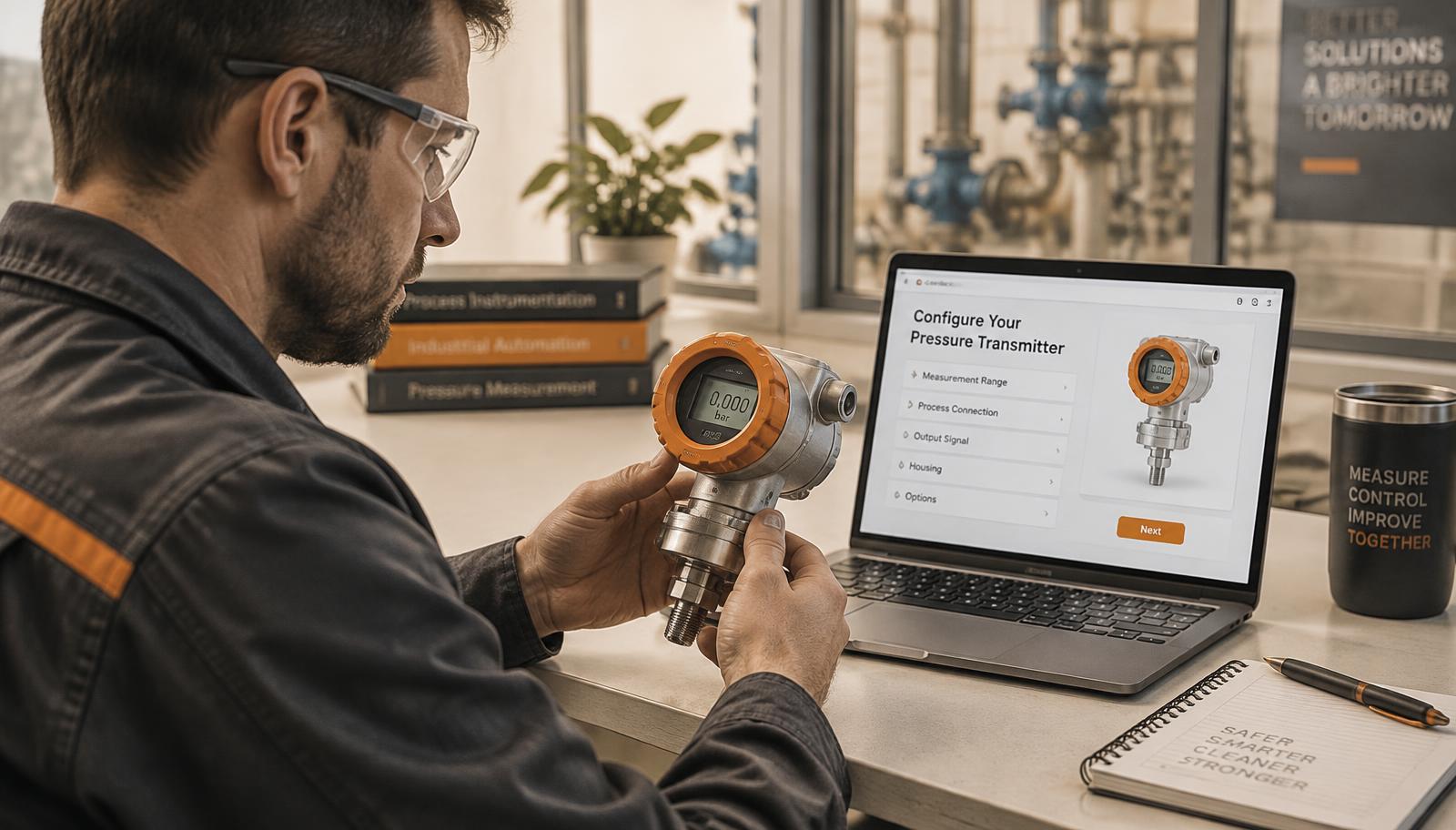
No one in industrial sales enjoys wasting time. Yet most sales engineers spend the majority of their week doing exactly that — cross-referencing datasheets, chasing pricing approvals, and manually assembling quote documents before a single proposal reaches the customer. Industry research consistently shows that sales reps spend only a fraction of their working hours actually selling. The rest goes to generating quotes, waiting on engineering sign-off, and correcting specification errors.
For instrumentation manufacturers and suppliers, this problem is worse than in almost any other sector. Your products are complex. Your customers have specific technical requirements. And the cost of getting a quote wrong — wrong material, wrong pressure rating, wrong area classification — goes well beyond a lost deal. It damages your reputation.
CPQ software was built to solve exactly this. This guide explains what CPQ is, how it works for industrial companies, and what to look for when evaluating a solution for your business.
What Is CPQ for Industrial Manufacturers?
CPQ stands for Configure, Price, Quote. It is a software platform that automates the three most time-consuming parts of the industrial sales process: building a technically valid product configuration, applying accurate pricing, and generating a professional quote document — all in a single workflow.
For instrumentation manufacturers, a CPQ solution does three things:
Configure guides your sales team or customers through a series of application-specific questions — process fluid, operating pressure, temperature range, connection type, area classification — and uses a rules engine to match those requirements to the correct product. Only technically valid configurations are allowed to proceed. Incompatible combinations are blocked automatically.
Price applies your pricing structure the moment a valid configuration is confirmed. List prices, customer-tier discounts, project-specific rates, multi-currency conversions, and volume breaks are all calculated instantly, based on rules your commercial team controls. No manual lookups, no spreadsheet errors, no unauthorised discounts.
Quote generates a complete, branded quote package at the click of a button. This includes itemised pricing, product datasheets, technical specifications, certifications, and delivery terms — everything your customer needs to make a purchasing decision, packaged together professionally.
Why Standard CPQ Tools Fall Short in Industrial Sales
Most CPQ platforms were designed for software companies, financial services, or consumer goods manufacturers. They work well when products are straightforward and configurable within a simple set of options. Industrial products are fundamentally different.
A single pressure transmitter may have over 400 valid configurations. The correct selection depends on the process fluid, the operating temperature, the pipe schedule, the connection standard, the hazardous area classification, and the required material certification. A generic CPQ tool has no way of knowing that a particular wetted material fails in chlorine service, or that a specific sensor cannot be used in an ATEX Zone 0 environment.
This is why instrumentation manufacturers who have tried standard CPQ platforms often find them difficult to implement and limited in practice. The platform doesn't understand the product. The product knowledge still lives with your engineers — and the bottleneck remains.
Traditional Quoting vs. Industrial CPQ
Traditional process: cross-reference datasheets manually → email engineering for validation → wait for pricing approval → build the quote doc in Word or Excel → attach specs and certs by hand. 2–5 days per quote.
With industrial CPQ: guided product configuration → automatic compatibility checks → instant rules-based pricing → one-click branded quote → auto-attached documentation. Under 10 minutes.
What Industrial CPQ Software Should Actually Do
When evaluating a CPQ solution for an industrial manufacturing or supply business, look for these capabilities:
Application-first configuration. The system should start with the customer's process requirements, not your product catalog. Questions should be driven by the application, with the product selected as an output — not the starting point.
Industry-specific rules engine. The platform should understand your product logic natively — material compatibility, pressure and temperature limits, connection standards, hazardous area classifications, and certification requirements. These rules should be configurable by your team without requiring custom software development.
Complete quote documentation. Industrial buyers need more than a price. They need datasheets, technical specifications, material certifications, and sometimes dimensional drawings. A CPQ built for industrial use generates all of this automatically as part of the quote package.
Guided selling for non-technical reps. Not every member of your sales team is a qualified instrumentation engineer. A good industrial CPQ guides a junior sales rep through the right questions so they can produce a technically sound proposal without needing to escalate to an application engineer for every enquiry.
Pricing controls and approval workflows. The system should enforce your pricing strategy — discount limits, approval thresholds, contract-specific rates — automatically. Managers should be able to define the rules once and trust that every quote follows them.
Integration with your existing systems. Your CPQ platform should connect to your CRM, ERP, and product catalog. Quotes should sync automatically. Customer data should flow both ways. Nothing should require manual re-entry.
The Real Business Case for Industrial CPQ
The impact of a well-implemented CPQ platform goes beyond faster quoting. When your team can respond to an RFQ the same day it arrives — with a technically accurate, professionally formatted proposal — you change your position in the sales process. Industrial buyers typically shortlist the first two or three credible responses they receive. Being first matters.
Beyond win rate, the operational benefits are significant. Engineering teams spend less time reviewing quotes and more time on high-value technical work. Pricing errors are eliminated at the source. Margin leakage from uncontrolled discounting stops. And new sales reps reach full productivity faster, because the product knowledge is embedded in the system, not locked inside the heads of your most experienced people.
Do You Need CPQ Software?
If your team handles more than a handful of technically complex enquiries per month, and if your products have configurable options that affect compatibility, pricing, or documentation — then yes, CPQ software will have a measurable impact on your business.
The question is not whether you need it. The question is whether the platform you choose was built for the complexity of industrial products, or whether it was built for something else and adapted to fit.
Start Quoting Smarter
The instrumentation manufacturers who win the most business are not always the ones with the best products. They are the ones who can respond fastest, with the highest technical accuracy, and with a proposal that makes it easy for the customer to say yes.
SwiftyQuote was built specifically for this — by application engineers who understand industrial products, for sales teams who need to move at the speed the market demands.
Frequently Asked Questions About CPQ
What does CPQ stand for?
CPQ stands for Configure, Price, Quote. It is software that automates building a valid product configuration, applying accurate pricing, and generating a professional quote document in a single workflow.
How is industrial CPQ different from standard CPQ?
Standard CPQ tools handle simple product options. Industrial CPQ understands technical product logic — material compatibility, pressure and temperature limits, hazardous area classifications, and certification requirements — so only buildable configurations can be quoted.
How long does it take to implement CPQ software?
Generic platforms can take months of custom development for industrial products. A purpose-built industrial CPQ is configured with your product rules and pricing, so teams typically start quoting in weeks rather than months.
Can CPQ integrate with our CRM and ERP?
Yes. A good industrial CPQ connects to your CRM, ERP, and product catalog so quotes sync automatically and customer data flows both ways, with no manual re-entry.
Will CPQ work for non-technical sales reps?
That is one of its main benefits. Guided selling walks any rep through the right application questions, so they can produce a technically sound proposal without escalating every enquiry to an application engineer.